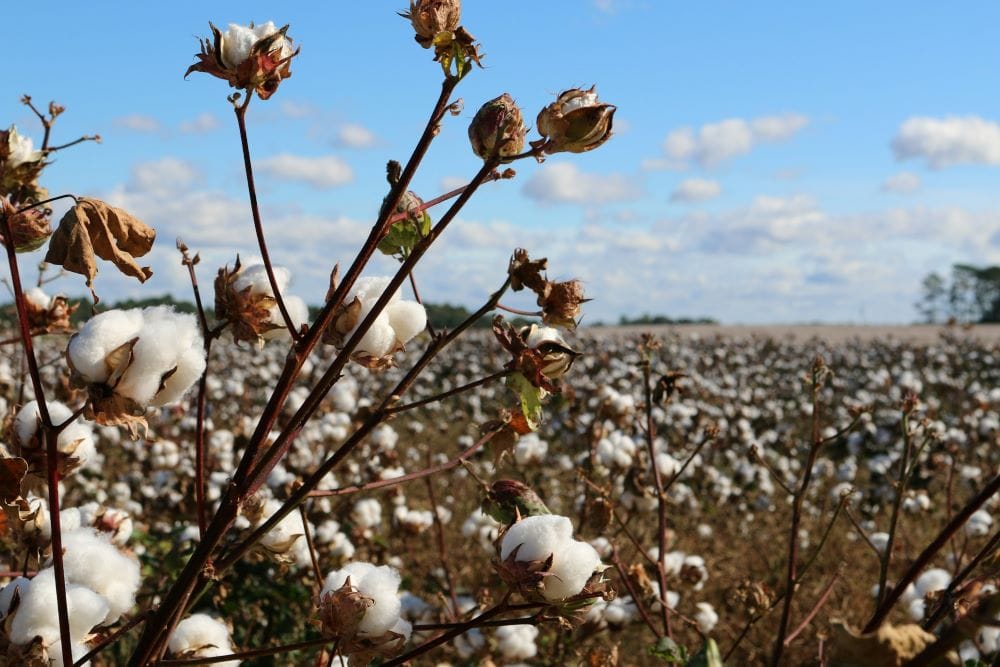
Cotton is one of the important fibers used to make clothes and a number of textile products. Cotton has a history of about 7000 years. Many civilizations have developed it.
There are four types of cotton commonly produced:
- Gossypium hirsutum
- Gossypium barbadense
- Gossypium arboretum
- Gossypium herbaceum
Fabrics like Cambric, Corduroy, Denim, Seersucker, and Terrycloth are made from cotton. Cotton is measured in a Bale equal to 480 pounds. The estimated global production is around 25 million tons. China is the largest producer of cotton in the world.
India is the second-largest producer of cotton and cultivating it due to rising demand. The area of cotton cultivation expanded from 50,000 hectares in 2002 to 8.4 million hectares in 2023.
Here is the latest estimation of cotton production for each of the top cotton-producing countries in 2023-24, based on recent data:
1. China
China is the world’s leading producer of cotton, driven by its vast population and high domestic demand. It also ranks as the largest importer and consumer of cotton globally, reflecting its central role in the international textile industry.
Production: 27.5 million bales
Global Production: 24.2%
2. India
India has a major cotton industry and is known as the origin of the cotton business. It is thought that India has a history of over 3000 years, and it is also known for its finest and most exquisite cotton products. Compared to China, there is a larger cultivable area. 9.6 million hectares of land dedicated for cotton cultivation.
Production: 25.5 million bales
Global Production: 23%
3. Brazil
Brazil is a leading global exporter of agricultural commodities, with cotton ranking among its most vital and economically significant crops. Grown extensively in the Cerrado region, Brazilian cotton benefits from advanced farming techniques, favorable climate conditions, and strong international demand. The country has steadily increased its production capacity, making it a key supplier to textile industries worldwide and a competitive force in sustainable cotton farming.
Production: 14.6 million bales
Global Production: 12.8%
4. USA
The USA is the world’s largest country, and it also imports cotton from major cotton-producing nations, growing over hundreds of hectares. American farmers grow cotton using machinery and sophisticated technology.
Production: 12.4 million bales
Global Production: 10.6%
5. Pakistan
Pakistan is one of the largest producers, exporters, and consumers of cotton in the world, ranking fourth overall. Small farmers, who farmed on more than 3 million hectares of land, and over 1.4 million farmers depend on cotton farming.
Production: 6.7 million bales
Global Production: 5.9%
6. Australia
Farmers in Australia were the first in the world to recognize the potential of bioengineering. Australia has a good GDP, and the cotton farmers make good use of technology.
Production: 4.8 million bales
Global Production: 4.4%
7. Turkey
The Turkish cotton industry is big, supported by the government, and has created a lot of jobs . It generates over 3.2 million bales of cotton annually, exports cotton of the highest quality. It challenges such as water scarcity persist.
Production: 3.2 million bales
Global Production: 2.8%
8. Uzbekistan
Uzbekistan, the third-largest exporter in the world, has a sizeable market in Europe. The majority of cotton in Uzbekistan is grown organically by small farmers.
Production: 2.9 million bales
Global Production: 2.5%
9. Argentina
Cotton Production in Argentina Is Gaining Momentum Increasingly. For the 2023–24 crop year, the planted area is expected to be around 610,000 hectares, or 15% more than last year. Argentina expects more yields with increased acreage and favorable growing conditions.
Production: 1.6 million bales
Global Production: 1.4%
10. Mali
A major cotton-producer in West Africa, Mali is currently regaining its place among the continent’s biggest. In fact, Mali’s cotton sector mainly relies on small holder farms, with some supplemental government support in the forms of subsidies and technical assistance.
Production: 1.3 million bales
Global Production: 1.1%
List of countries produce most cotton in the world
| Country | Production Volume | Global Production Percentage |
|---|---|---|
| China | 27.5M | 24.2% |
| India | 26.2M | 23% |
| Brazil | 14.6M | 12.8% |
| United States | 12.1M | 10.6% |
| Pakistan | 6.7M | 5.9% |
| Australia | 5M | 4.4% |
| Turkey | 3.2M | 2.8% |
| Uzbekistan | 2.9M | 2.5% |
| Argentina | 1.6M | 1.4% |
| Mali | 1.3M | 1.1% |
| Benin | 1M | 0.9% |
| Turkmenistan | 900K | 0.8% |
| Mexico | 897K | 0.8% |
| Burkina Faso | 770K | 0.7% |
| Ivory Coast | 745K | 0.7% |
| Cameroon | 660K | 0.6% |
| Sudan | 600K | 0.5% |
| Tajikistan | 565K | 0.5% |
| Myanmar | 547K | 0.5% |
| Afghanistan | 500K | 0.4% |
| Tanzania | 470K | 0.4% |
| Azerbaijan | 450K | 0.4% |
| Nigeria | 350K | 0.3% |
| Egypt | 350K | 0.3% |
| Iran | 350K | 0.3% |
| Kazakhstan | 300K | 0.3% |
| Zimbabwe | 215K | 0.2% |
| Chad | 205K | 0.2% |
| Paraguay | 205K | 0.2% |
| Ethiopia | 180K | 0.2% |
| Uganda | 170K | 0.1% |
| Syria | 160K | 0.1% |
| Bangladesh | 155K | 0.1% |
| Togo | 130K | 0.1% |
| Mozambique | 115K | 0.1% |
| Malawi | 90K | 0.1% |
| Kyrgyzstan | 85K | 0.1% |
| South Africa | 62K | 0.1% |
Cotton Types: Origins, Features & Common Uses
| Name / Origin | Key Features & Distinctive Qualities | Typical Applications |
|---|---|---|
| Egyptian Cotton (e.g. Giza) | Extra-long staple fibers; exceptionally soft, strong, and lustrous. Widely regarded as premium-grade cotton. | Luxury bed linens, high-thread-count fabrics, upscale clothing. |
| Pima / Supima Cotton (USA / Peru) | Extra-long staple; smooth texture, durable, excellent dye absorption. “Supima” is the U.S. trademarked variant. | Premium shirts, denim, luxury towels, bedding, high-end apparel. |
| Upland Cotton (common in U.S., India, etc.) | Shorter staple; high-yield and cost-effective. Less refined than long-staple varieties. | Everyday wear, t-shirts, jeans, mass-market textiles. |
| Organic Cotton | Grown without synthetic pesticides; supports eco-conscious farming and ethical standards. May involve higher costs or slower yield. | Sustainable fashion, baby clothing, towels, bedding. |
| Muslin (Dhaka / Bengal; “phuti karpas”) | Historically hand-woven; ultra-fine, lightweight, and sheer. Celebrated for artisanal craftsmanship. | Sarees, scarves, heritage garments, sheer fashion layers. |
| Calico (South India: Kerala / Gujarat) | Plain-weave, budget-friendly cotton; often printed. Named after Calicut, its place of origin. | Printed fabrics, quilts, casual wear, linings, home textiles. |
| Khadi (India) | Hand-spun and hand-woven; deeply rooted in Indian tradition. Symbol of self-reliance and artisanal labor. | Ethnic wear, eco-fashion, craft-based clothing, slow fashion. |
FAQs about Cotton
Cotton grows best in warm climates with long frost-free periods, plenty of sunshine, and moderate rainfall. It thrives in subtropical and tropical regions.
After harvesting, cotton fibers are separated from seeds through ginning, spun into yarn, and woven or knitted into fabric.
Cotton is biodegradable, renewable, and natural. However, sustainability depends on farming methods, as conventional cotton can be water-intensive and pesticide-heavy.
Major challenges include pest attacks (like bollworm), climate change, water scarcity, and fluctuating global prices.
China is both a leading producer and the largest consumer of cotton, as it has the world’s biggest textile and apparel industry.
Mali, Burkina Faso, and Benin are important cotton producers in Africa, with cotton serving as a key export crop.