Switzerland is known for its high quality of life, reliable public transportation, historic architecture, and beautiful urban landscapes. The largest cities in Switzerland include Zurich, Geneva, Basel, Lausanne, and Bern, each offering a distinct mix of economic opportunities, cultural attractions, and historic landmarks. Zurich is a major financial and business center, Geneva is renowned for international diplomacy, Basel is known for its museums and art scene, Lausanne is an important center for education and sports, and Bern is celebrated for its well-preserved medieval Old Town.
City rankings generally depend on each municipality’s population, so the order may change when metropolitan areas and surrounding suburbs are included. Switzerland’s extensive rail network, road connections, and international airports make it easy to travel between major cities and smaller towns. Whether you are interested in lakeside promenades, shopping districts, world-class museums, historic neighborhoods, or local food, exploring Switzerland’s largest cities offers a varied introduction to the country’s urban life, history, and culture.
| Rank | City Name | Population | Population Density per km | Area (km |
|---|---|---|---|---|
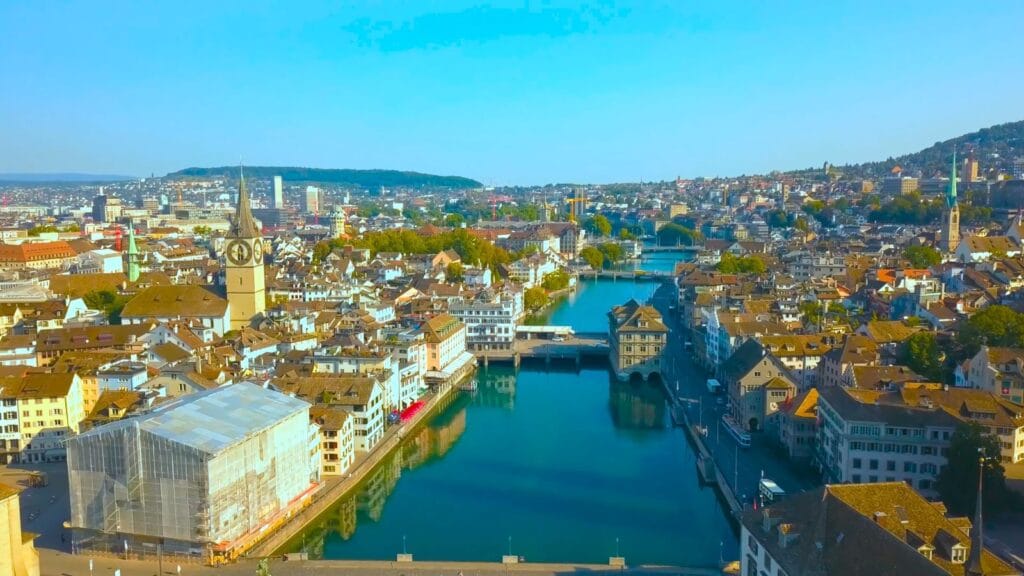
| 1 | Zurich | 434,008 | 4,876 | 89 |
| 2 | Geneva | 201,741 | 13,000 | 16 |
| 3 | Basel | 177,595 | 7,400 | 24 |
| 4 | Lausanne | 139,111 | 3400 | 41 |
| 5 | Bern | 133,791 | 2600 | 52 |
| 6 | Winterthur | 111,840 | 1600 | 68 |
| 7 | Lucerne | 81,691 | 2200 | 37 |
| 8 | St. Gallen | 75,806 | 1900 | 39 |
| 9 | Lugano | 63,185 | 830 | 76 |
| 10 | Biel/Bienne | 55,120 | 2600 | 21 |
| 11 | Thun | 43,723 | 2000 | 22 |
| 12 | Bellinzona | 43,219 | 260 | 165 |
| 13 | Koniz | 41,772 | 820 | 51 |
| 14 | Fribourg | 38,358 | 4100 | 9 |
| 15 | La Chaux-de-Fonds | 37,942 | 3,499 | 11 |
| 16 | Schaffhausen | 36,582 | 880 | 42 |
| 17 | Chur | 35,373 | 1300 | 28 |
| 18 | Vernier | 34,774 | 4500 | 8 |
| 19 | Uster | 34,715 | 1200 | 29 |
| 20 | Sion | 34,704 | 1200 | 30 |
FAQs on Largest Swiss Cities by Population
1. What is the largest city in Switzerland by population?
- Zürich is the largest city, with about 440,000 residents in the city proper. Its metro area, however, exceeds 1 million people.
2. Which cities make up the top five?
- Zürich (~0.44M) – financial & cultural hub
- Geneva (~0.20M) – global diplomatic center
- Basel (~0.18M) – pharmaceutical & art capital
- Lausanne (~0.14M) – home of the International Olympic Committee
- Bern (~0.13M) – Switzerland’s federal capital
3. Why do Swiss cities seem small compared to other European cities?
- Swiss municipalities are kept small and self‑governing, so metropolitan regions are split among many communes.
- Example: Greater Zürich has over 1 million people, but the city proper is only ~440,000.
4. What are other notable large cities beyond the top five?
- Winterthur (~110K) – former industrial town near Zürich
- Lucerne (~80K) – tourism hotspot by Lake Lucerne
- St. Gallen (~80K) – famous for its abbey library
- Lugano (~60K) – largest Italian‑speaking city
- Biel/Bienne (~60K) – bilingual watchmaking center
5. How does population ranking differ between city proper and urban area?
- City proper counts only within municipal boundaries.
- Urban area (agglomeration) includes suburbs and surrounding towns.
- Example: Geneva city proper has ~200K, but its urban area exceeds 430K.
6. Which Swiss cities are growing fastest?
- Lausanne and Basel show higher growth rates (2–3% annually in recent estimates).
- Smaller cities like Montreux and Fribourg also show steady increases.
7. Is Bern the largest city since it’s the capital?
- No. Bern is the federal capital but only ranks 5th by population. Zürich is the largest and most economically dominant.