Moving day has a way of turning “just a few boxes” into a truck full of stuff nobody remembers packing. If your new place isn’t ready yet, a storage unit can bridge that gap, but only if you get the storage unit size right. Rent too small, and you’re stacking boxes on top of your microwave and praying nothing shifts. Rent too big, and you’re paying for square footage you’ll never touch. This guide walks through how to figure out exactly how much space you actually need, what tends to eat up the most room, and a few things most people forget until it’s too late.
Before diving into the details, here’s a quick snapshot of common unit sizes and what they typically hold. Use it as a starting point, then adjust based on your own inventory.
| Storage Unit Size | Approx. Square Footage | Typical Contents |
|---|---|---|
| 5×5 ft | 25 sq ft | Boxes, small furniture, seasonal decor |
| 5×10 ft | 50 sq ft | Studio or 1-bedroom apartment contents |
| 10×10 ft | 100 sq ft | 2-bedroom apartment, appliances, some furniture |
| 10×15 ft | 150 sq ft | 3-bedroom home, larger furniture sets |
| 10×20 ft | 200 sq ft | 4+ bedroom home, garage items, vehicles |
Keep in mind these are rough guides, not gospel. A studio apartment stuffed with books and gym equipment can easily outgrow a 5×10.
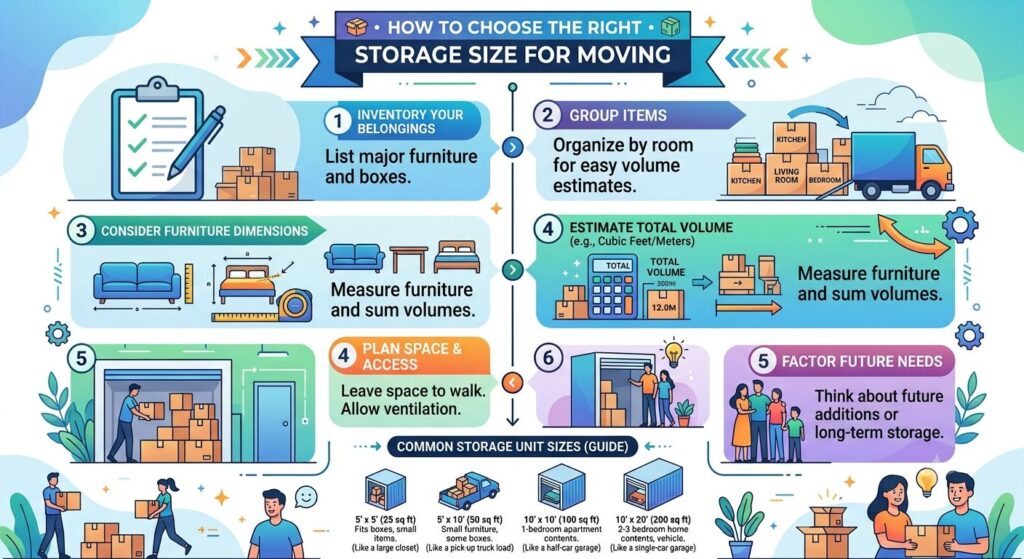
Why Getting the Size Right Actually Matters
A storage unit that’s too small forces awkward decisions. Do you stack the dresser on its side? Cram the bike frame between boxes? None of that is safe, and it usually ends with something scratched, dented, or broken. On the flip side, an oversized unit isn’t just wasted money it’s wasted money every single month you’re paying for it.
Choosing the right storage unit size during a move isn’t about guessing. It comes down to knowing what’s actually going into storage, how it’s shaped, and how long it needs to sit there.
Step 1: Work Out What Actually Needs to Be Stored
Here’s the thing: not everything you own needs to go into storage. Some items can move straight into the new home, even if the home isn’t fully ready. Start with an inventory. Split your belongings into two piles: what travels immediately and what waits.
Furniture, seasonal decorations, sporting equipment, and the general overflow of household goods are usually the items that end up in temporary storage. Anything you use daily kitchen essentials, work equipment, a week’s worth of clothes probably shouldn’t.
This step alone tends to shrink the estimated storage unit size people think they need. Once you separate “must store” from “can move now,” the pile often looks smaller than expected.
Combined Moving and Storage Services
Many professional moving companies now bundle their moving services with storage, which saves a step. Instead of renting a separate facility and coordinating two moves, belongings go straight from your old home into secure storage. Several movers offering full-service relocation also provide storage units Calgary residents can use when a new property isn’t ready for occupancy or certain items just aren’t needed right away.
This setup is especially handy during renovations, downsizing projects, delayed possession dates, or temporary relocations basically any situation where your stuff needs a place to sit while your living situation catches up.
What to Consider Before Renting a Storage Unit
Large Furniture Takes Up the Most Room
Sofas, beds, dining tables, wardrobes, dressers, bookshelves these are the space hogs. Measure them. Note which ones can be partially disassembled, because a bed frame broken down into its parts takes up a fraction of the space it does fully built. Dining tables are the same story: legs off, and suddenly there’s room for three more boxes.
Estimate Your Box Count
Once the furniture is accounted for, figure out roughly how many boxes you’ll need for clothing, kitchenware, books, electronics, and the rest. This tells you how much storage unit size is left over after the big pieces are placed. A small tip that saves real headaches later: use uniform box sizes. They stack cleaner, use vertical space better, and don’t create those wobbly towers that lean the moment you touch them.
Some Items Need Extra Room (and Extra Care)
Appliances, bicycles, lawn equipment, musical instruments, artwork, and fragile antiques don’t play by the same rules as boxes. They need clearance, padding, and sometimes custom wrapping. And if anything is sensitive to humidity or temperature instruments, artwork, electronics you’re probably looking at climate-controlled storage, which changes both the size and type of unit worth renting.
Think About How Long You’ll Need It
Storing for several months? Leave aisles between stacked items so you’re not unpacking half the unit just to grab one box. Storing for two or three weeks before the move-in date? Maximizing every inch might make more sense since you won’t be digging through it repeatedly.
Leave Some Breathing Room
It’s tempting to rent the smallest unit that technically fits everything. Don’t. Overfilled units are a pain to unload and raise the odds of something getting damaged when you pull it out. Sizing up slightly gives you room to organize, easier access to what you need, and flexibility if you end up storing a few more items than planned which, let’s be honest, almost always happens.
Common Mistakes People Make With Storage Unit Size
- Underestimating box volume. People tend to picture furniture and forget how much space forty boxes actually take up.
- Skipping measurements. Eyeballing furniture dimensions instead of measuring leads to units that are either cramped or half-empty.
- Ignoring disassembly options. Not breaking down beds, tables, or shelving wastes significant space for no real reason.
- Booking the exact size needed with zero buffer. Life doesn’t move in straight lines; plan for a little extra.
Final Thoughts
Picking the right storage unit size isn’t complicated once you break it into steps: sort what actually needs storing, measure your big furniture, estimate your boxes, account for special items, and leave a bit of buffer space. Get that right, and your move gets simpler, cheaper, and a lot less stressful, which, at the end of a move, is really all anyone’s asking for.