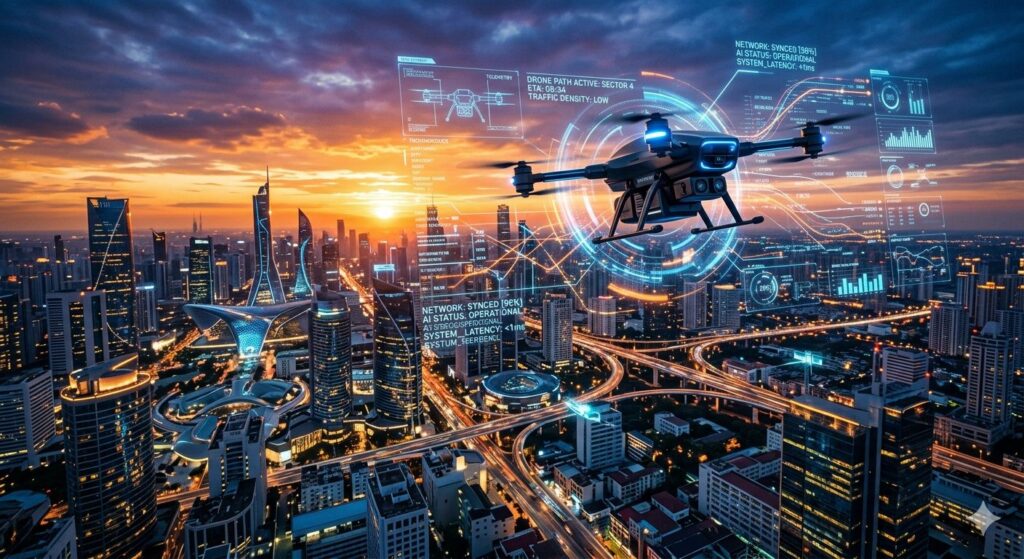
Drones are rapidly evolving from simple remote-controlled devices into intelligent, AI-powered systems capable of autonomous flight and real-time decision-making. With advancements in machine learning, computer vision, and edge computing, modern drones can analyze environments, avoid obstacles, and perform complex tasks with minimal human intervention. Industries such as agriculture, logistics, defense, and infrastructure are increasingly relying on these smart systems to improve efficiency and reduce costs. This article explores the latest innovations in drone technology, the role of artificial intelligence, and the leading companies shaping the future of autonomous aerial systems.
The Future of Flight: How AI Is Transforming Drone Technology
Drones have evolved far beyond simple remote-controlled flying devices. Today, they are intelligent systems powered by artificial intelligence (AI), capable of autonomous decision-making, real-time data analysis, and complex operations without human intervention.
From agriculture and logistics to defense and smart cities, AI-powered drones are reshaping industries at an unprecedented pace. This article explores the latest advancements, real-world applications, and the companies leading this technological revolution.
The Rise of AI-Powered Autonomous Drones
One of the biggest breakthroughs in drone technology is autonomy. Traditional drones required skilled pilots, but modern drones can now fly themselves using AI algorithms.
These drones rely on:
- Machine learning models
- Sensor fusion (cameras, LiDAR, GPS)
- Real-time environmental analysis
AI allows drones to:
- Navigate complex environments
- Avoid obstacles dynamically
- Plan optimal flight paths
For example, companies like Skydio are pioneering fully autonomous drones that can track subjects and avoid obstacles without GPS, making them highly effective in dense forests, urban environments, and indoor operations.
Edge AI and Real-Time Data Processing in Drones
Modern drones are increasingly equipped with edge AI, meaning they process data onboard instead of relying on cloud servers.
This advancement brings several advantages:
- Instant decision-making
- Reduced latency
- Improved privacy and security
With onboard AI chips, drones can:
- Analyze live video feeds
- Detect objects in real time
- Respond immediately to changes
This is particularly useful in:
- Disaster response (search and rescue)
- Surveillance operations
- Industrial inspections
Companies like DJI have integrated powerful processors into their drones, enabling high-speed image recognition and advanced flight intelligence.
AI in Military and Defense Drones: The New Battlefield
The defense sector is one of the fastest adopters of AI-powered drones. These systems are no longer just reconnaissance tools—they are becoming intelligent combat assets.
Key innovations include:
- Autonomous combat drones
- AI-driven surveillance systems
- Swarm drone technology
Startups like Anduril Industries are building advanced AI-enabled systems capable of identifying threats and making tactical decisions in real time.
Similarly, AeroVironment develops battlefield-proven drones used for surveillance and precision missions.
These developments are redefining modern warfare by:
- Reducing human risk
- Increasing operational efficiency
- Enabling faster decision-making
Computer Vision and Object Recognition Capabilities
At the core of AI-powered drones lies computer vision, which allows drones to interpret and understand visual data.
Using deep learning, drones can:
- Recognize faces and objects
- Track vehicles or individuals
- Inspect infrastructure like bridges and power lines
This technology is widely used in:
- Security and law enforcement
- Traffic monitoring
- Construction site management
Companies such as Parrot are focusing on secure AI-driven drones with advanced imaging capabilities tailored for enterprise and government use.
Integration with GIS, IoT, and Smart Ecosystems
Drones are no longer standalone devices—they are part of larger digital ecosystems.
They integrate seamlessly with:
- Geographic Information Systems (GIS)
- Internet of Things (IoT) platforms
- Smart city infrastructure
This enables:
- Real-time mapping and data collection
- Automated monitoring systems
- Predictive analytics
For instance, drones used in agriculture can:
- Monitor crop health
- Detect irrigation issues
- Optimize pesticide use
Companies like Autel Robotics are expanding into enterprise solutions that integrate drones with data platforms for industries such as energy, agriculture, and construction.
Leading Drone Companies Dominating AI Innovation
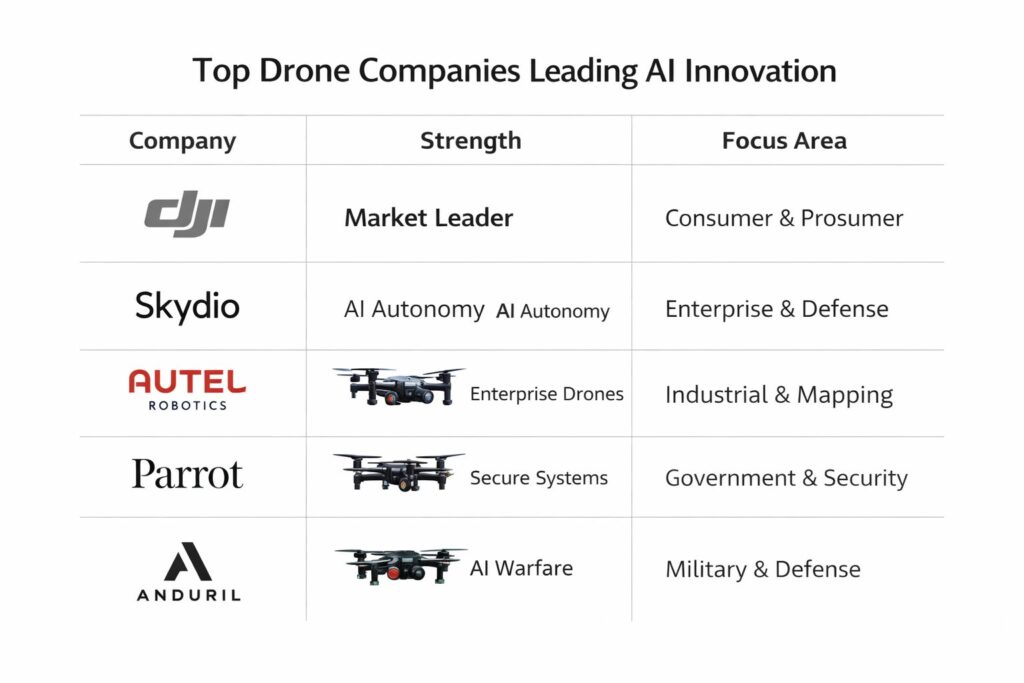
Here’s a clear comparison of the top companies shaping AI-driven drone technology:
| Company | Primary Focus | Key Strength | Best Known For |
|---|---|---|---|
| DJI | Consumer & enterprise | Hardware + ecosystem | Market dominance |
| Skydio | AI autonomy | Advanced navigation | Self-flying drones |
| Autel Robotics | Enterprise drones | Flexibility | Industrial applications |
| Parrot | Secure drones | Data privacy | Government solutions |
| AeroVironment | Defense | Reliability | Military drones |
| Anduril Industries | AI warfare | Software-driven | Autonomous combat systems |
Key Insights:
- DJI dominates globally with a strong ecosystem and affordability
- Skydio leads in AI autonomy and navigation
- Anduril is redefining AI warfare systems
- Parrot focuses on secure, regulation-friendly drones
Each company is pushing innovation in different directions, making the industry highly competitive and rapidly evolving.
Future Trends: Swarm AI, Delivery Drones, and Fully Autonomous Systems
The future of drone technology lies in even deeper AI integration. Some of the most exciting trends include:
1. Drone Swarms
Multiple drones working together using AI coordination:
- Military operations
- Large-scale surveillance
- Environmental monitoring
2. AI-Powered Delivery Drones
Companies are testing drone delivery systems for:
- E-commerce
- Medical supplies
- Food delivery
These drones can: Navigate cities autonomously, Avoid obstacles, Deliver packages efficiently
3. BVLOS (Beyond Visual Line of Sight)
AI is enabling drones to fly beyond human visibility:
- Long-distance inspections
- Infrastructure monitoring
- Logistics operations
4. Fully Autonomous Air Mobility
Future drones may function as:
- Air taxis
- Cargo transport systems
- Smart city infrastructure components
Challenges and Ethical Considerations
Despite rapid advancements, AI-powered drones face several challenges:
Privacy Concerns
- Surveillance capabilities raise ethical issues
- Data security is a major concern
Regulatory Barriers
- Governments impose strict drone regulations
- Airspace management remains complex
Security Risks
- Potential misuse for malicious purposes
- Vulnerability to hacking
Companies and governments must work together to ensure:
- Safe deployment
- Ethical usage
- Strong cybersecurity
Conclusion: AI Is Redefining the Drone Industry
AI is transforming drones from simple flying machines into intelligent, autonomous systems capable of performing complex tasks across industries.
Key takeaways:
- AI enables autonomy, real-time processing, and advanced decision-making
- Defense and enterprise sectors are leading innovation
- Integration with IoT and smart systems is expanding use cases
- Future developments will focus on full autonomy and large-scale deployment
As technology continues to evolve, drones will play a crucial role in shaping industries, improving efficiency, and unlocking new possibilities in the digital age.