You don’t need a four-hour morning routine or a $200 planner to boost your productivity. Most people lose time to small, fixable habits — vague priorities, constant notifications, and decision fatigue — not a lack of discipline.
This guide walks through practical, low-effort tricks that produce a noticeable difference the same day you try them. Whether you’re managing a packed work schedule, studying for exams, or simply trying to stop your to-do list from growing faster than you can clear it, these techniques are built to fit into a normal day without requiring you to overhaul your life.
By the end, you’ll have a toolkit of morning habits, time management methods, focus techniques, and smarter-working strategies you can mix and match based on what your day actually looks like.
Why Small Habits Beat Big Productivity Systems
Elaborate productivity systems often fail for a simple reason: they require more upkeep than the time they save. A color-coded planner with twelve categories sounds appealing, but if maintaining it becomes its own task, it adds friction instead of removing it.
Small, frictionless habits succeed because they target the actual causes of lost time:
- Decision fatigue — every small choice, from what to wear to what task to start next, draws on the same limited mental energy.
- Context-switching costs — jumping between unrelated tasks forces your brain to reload context each time, which is slower than it feels.
- Distraction loops — notifications and open tabs create a constant low-level pull on attention, even when you’re not actively checking them.
Behavioral researchers have long noted that habits requiring less than two minutes of setup are far more likely to stick than complex systems, simply because there’s less opportunity for the habit to break down. That principle underlies almost every trick in this guide.
Morning Routines That Set the Tone
How your morning starts has an outsized effect on the rest of your day. These two habits take less than ten minutes combined but prevent hours of inefficiency later.
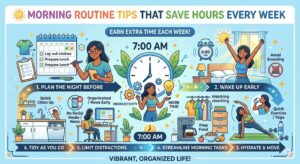
Prepare the Night Before
Spend five minutes each evening writing down your top three priorities for tomorrow. This single habit removes the most expensive cost of a typical morning: deciding where to start.
How to do it:
- Before closing your laptop, write down the three most important tasks for tomorrow.
- Rank them by importance, not urgency.
- Leave the list somewhere visible — your desk, your phone’s lock screen note, or a sticky note.
When you sit down the next morning, you start working immediately instead of spending the first 20–30 minutes deciding what to do.
Tackle Your Hardest Task First
Willpower and focus are typically highest in the first few hours after waking. Use that window for your most demanding task — the one you’re most likely to avoid later in the day.
This approach, sometimes called “eating the frog,” works because:
- It removes your heaviest task while your energy is freshest.
- It prevents the task from looming over the rest of your day.
- It creates early momentum that makes everything afterward feel easier by comparison.
Time Management Tricks That Work Instantly
Once your morning priorities are set, the next bottleneck is usually how time gets allocated during the day. These three techniques address that directly.
Time-Block Your Calendar
An open task list invites procrastination because nothing forces you to start. Time blocking solves this by assigning a fixed slot to each task, turning a vague intention into a scheduled commitment.
| Task Type | Suggested Block Length | Notes |
|---|---|---|
| Quick admin tasks | 15–30 minutes | Batch several together |
| Focused project work | 60–90 minutes | Protect from interruptions |
| Creative or strategic work | 90–120 minutes | Schedule during peak energy hours |
Treat each block like an unmissable meeting. If something urgent comes up, reschedule the block — don’t simply let it disappear.
Use the Pomodoro Technique
The Pomodoro Technique breaks work into short, focused sprints followed by brief breaks. Knowing a break is coming makes it easier to stay focused during the sprint itself.
- Set a timer for 25 minutes.
- Work on a single task with no interruptions.
- Take a 5-minute break.
- After four sprints, take a longer 15–20 minute break.
This method works particularly well for tasks that feel tedious or that you’re tempted to avoid, since the time commitment feels small and finite.
Apply the Two-Minute Rule
If a task takes less than two minutes, do it immediately rather than adding it to your list. Replying to a short email or filing a document costs more mental energy to track than to simply finish.
Unfinished micro-tasks quietly drain focus throughout the day, even when you’re not consciously thinking about them — clearing them as they appear keeps that background noise from building up.
Cutting Distractions for Deeper Focus
Time management only works if your attention actually stays on the task. These habits remove the most common sources of interruption.
Turn Off Notifications During Deep Work
Every notification — even ones you don’t open — pulls attention away from the task at hand, and refocusing afterward can take several minutes. Put your phone on do-not-disturb and close unrelated tabs before starting a focus block.
If checking messages feels essential, schedule two or three specific check-in times during the day instead of reacting to every alert as it arrives.
Use the “One Task, One Tab” Approach
Multiple open browser tabs create a constant, low-level invitation to drift off-task. Close everything except what the current task needs. If something feels worth saving for later, jot it into a running notes file instead of opening a new tab.
Keep Your Workspace Visually Clear
A cluttered desk or desktop adds subtle visual noise that competes for attention. Spending two minutes clearing your immediate workspace before starting a task has a noticeable effect on how quickly you settle into focus.
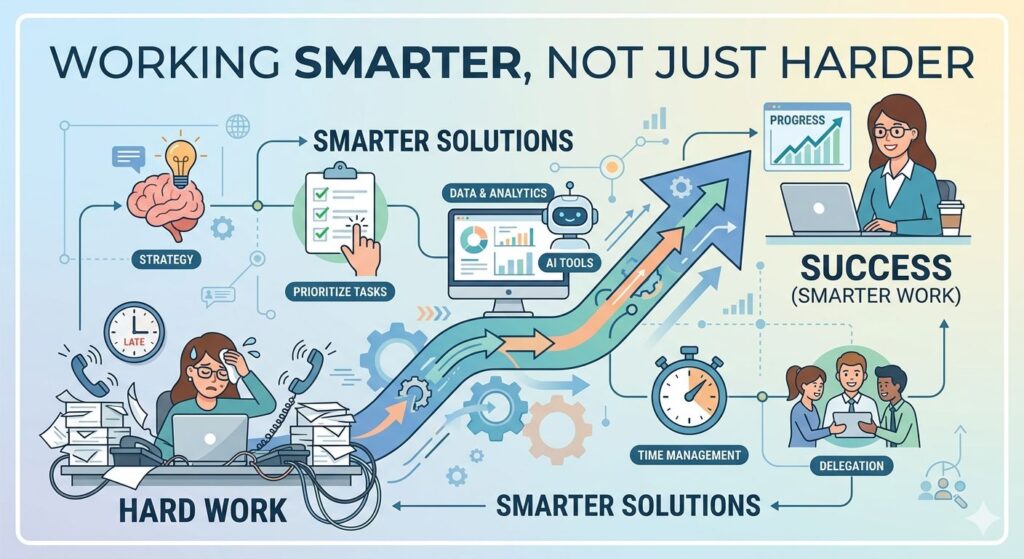
Working Smarter, Not Just Harder
Once distractions are under control, the next gain comes from being selective about what you actually spend time on.
Apply the 80/20 Rule
Roughly 80% of meaningful results tend to come from about 20% of total effort. Before adding a new task to your list, ask whether it genuinely moves an important goal forward or whether it’s busywork that simply feels productive.
Reviewing your task list weekly with this lens helps you cut low-value activities and protect time for the work that actually matters.
Batch Similar Tasks Together
Switching between different types of work costs more time than the tasks themselves, because each switch requires the brain to reload context. Group similar activities into batches:
- Answer all emails in one sitting rather than throughout the day.
- Make all phone calls back-to-back.
- Review or edit multiple documents in a single block.
Manage Energy, Not Just Time
Not all hours are equal. Identify when your energy and focus naturally peak — for most people, this falls within a few hours of waking — and schedule demanding work during that window. Save lower-energy periods for routine tasks like email, filing, or administrative work.
Benefits of energy-based scheduling:
- Higher-quality output on complex tasks
- Less reliance on willpower alone
- Reduced burnout from fighting your natural rhythm
Potential drawback:
- Requires a flexible schedule, which isn’t always possible in roles with fixed meeting times
Tools and Systems to Sustain Productivity
Productivity tools can reinforce good habits, but they rarely create them on their own. The right tool depends on what you’re already struggling with.
- Task managers (e.g., to-do list apps) work well once you already know how to prioritize — they organize existing habits rather than build new ones.
- Time trackers help reveal where your day actually goes, which is useful before deciding which tricks in this guide to focus on first.
- Habit trackers support consistency for habits like preparing the night before, by giving a visual record of streaks.
- Accountability partners or check-ins add light external pressure, which is especially useful for solo workers or freelancers without built-in deadlines.
The most common mistake is adopting a new app before fixing the underlying habit — a sophisticated task manager filled with unclear priorities still produces unclear days.
Common Productivity Mistakes to Avoid
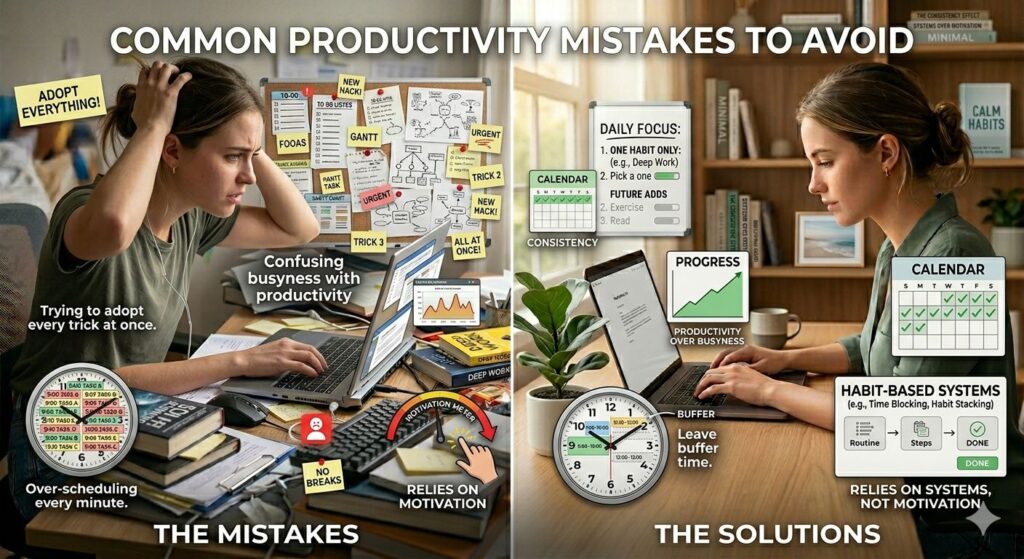
- Trying to adopt every trick at once. Pick one or two, build consistency, then add more.
- Confusing busyness with productivity. Being constantly active isn’t the same as making progress on what matters.
- Skipping breaks entirely. Sustained focus without recovery leads to declining output later in the day.
- Over-scheduling every minute. Leave buffer time between blocks for overruns and unexpected tasks.
- Relying on motivation instead of systems. Motivation fluctuates day to day; small, repeatable habits don’t.
Key Takeaways
- Small, low-friction habits boost your productivity more reliably than complex systems that collapse after a week.
- Preparing the night before and tackling your hardest task first set a strong tone for the entire day.
- Time blocking, the Pomodoro Technique, and the two-minute rule address the most common time management bottlenecks.
- Removing notifications, excess tabs, and visual clutter protects focus during deep work.
- The 80/20 rule and task batching help you work smarter rather than simply longer.
- Tools support good habits — they rarely create them from scratch.
FAQs
Pick one task you’ve been avoiding and set a 25-minute timer to work on just that. Momentum from a single completed sprint often carries into the rest of the day.
Break the task into a smaller first step that takes less than 10 minutes, and commit only to that step. Starting is usually the hardest part — momentum tends to follow.
They can, but mainly after the underlying habits — clear priorities, fewer distractions, scheduled focus time — are already in place. Apps organize good habits more than they create them.
Start with one or two. Trying to adopt an entire list at once usually leads to abandoning all of them within a week.
Time management focuses on scheduling tasks into available hours. Energy management focuses on matching task difficulty to your natural energy peaks, which often produces better results than scheduling alone.
For simple, low-attention tasks (like listening to a podcast while doing chores), light multitasking is fine. For complex or detail-heavy work, switching between tasks usually slows overall completion time.
Many people notice a difference the same day, especially with time blocking and removing notifications. Habits like preparing the night before tend to compound over one to two weeks.
Restart the next day without trying to “make up” for the missed day. Consistency over time matters more than a perfect streak.
Conclusion
Boosting your productivity doesn’t require a perfect routine — it requires a few reliable habits you’ll actually stick with. Start with one or two tricks from this guide, such as time-blocking your morning or tackling your hardest task first, and build from there once they feel automatic. Small, consistent changes beat elaborate systems that never survive past week one.