Everyone has said it at some point: “I wish I’d known this years ago.” Usually it’s right after discovering a ridiculously simple trick that saves twenty minutes a day, every single day, forever. These time-saving tips aren’t about cramming more into your schedule. They’re about cutting out the friction that quietly eats your hours without you ever noticing it disappear.
Most people don’t lose time in one big dramatic chunk. They lose it in two-minute leaks: searching for keys, rewriting a half-finished email, standing in front of the fridge, deciding what to cook, and refolding laundry that got dumped on the bed. Add those leaks up over a week, and you’re easily looking at five to ten hours gone.
This guide pulls together the time-saving tips that people consistently say they wish they’d learned sooner. They’re practical, low-effort to start, and they work whether you’re managing a household, a career, a side hustle, or all three at once. By the end, you’ll have a toolkit you can start using today, not someday.
Why Most People Waste Time Without Realizing It
Before jumping into tips, it helps to understand the pattern behind wasted time. Three habits show up again and again.
Decision fatigue is the first culprit. Every small choice, what to wear, what to eat, which task to start first, drains a bit of mental energy. By midday, decisions take longer simply because the brain is tired of deciding.
Task switching is the second. Jumping between email, a phone notification, and a half-written report doesn’t just interrupt the task, it costs extra minutes every time the brain re-orients itself. Studies on workplace interruptions have found that refocusing after a distraction can take well over twenty minutes.
Reactive living rounds out the list. When the day is run by whatever pops up first, urgent but unimportant tasks crowd out the things that actually matter. The fix for all three is the same: reduce the number of decisions, protect focus, and plan ahead just enough to stay proactive instead of reactive.
Morning Routine Tips That Save Hours Every Week
Mornings set the tone for the rest of the day, and a chaotic start almost always cascades into a chaotic afternoon.
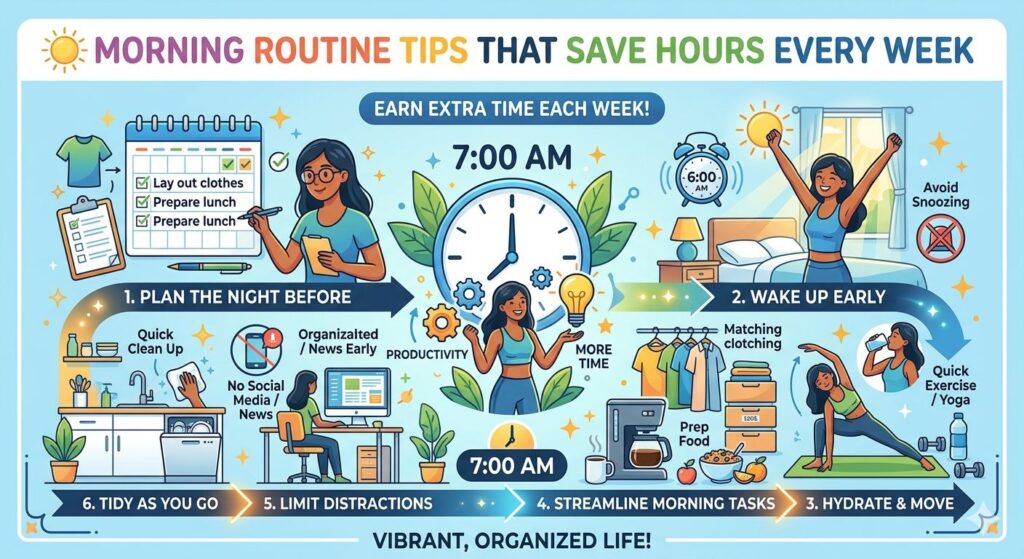
Prep the Night Before
Laying out clothes, packing a bag, and writing tomorrow’s top three priorities before bed removes a dozen small decisions from the morning. This single habit alone can save fifteen to twenty minutes daily.
Use a “Launch Pad”
Designate one spot near the door for keys, wallet, badge, and anything else needed to leave the house. No more frantic searching at the last second.
Shower and Dress With a Plan
Pick a default outfit formula (same kind of top, same kind of pants) for busy weeks. This is the same principle behind famous public figures wearing near-identical outfits daily: fewer choices, faster mornings.
| Morning Habit | Time Saved Per Day | Time Saved Per Week |
|---|---|---|
| Prep clothes and bag the night before | 15 min | 1 hr 45 min |
| Launch pad for essentials | 5 min | 35 min |
| Default outfit formula | 5 min | 35 min |
| Pre-set coffee maker or kettle timer | 5 min | 35 min |
Time Saving Tips for Work and Productivity
Work is where time saving tips pay off the most visibly, because the hours saved often translate directly into less stress and more output.
Time Block Your Calendar
Instead of an open to-do list, assign every task a specific block of time on the calendar. This forces realistic planning and prevents the day from being hijacked by whoever emails first.
Batch Similar Tasks
Answer all emails in two or three set windows instead of constantly. Group all phone calls together. Do all invoicing in one sitting. Batching avoids the mental cost of switching between different types of work.
Use the Two-Minute Rule
If a task takes less than two minutes, do it immediately instead of adding it to a list. Tracking it would take longer than finishing it.
Protect a Daily Deep Work Block
Even thirty to sixty minutes of uninterrupted focus, phone away, notifications off, can accomplish more than two scattered hours. Schedule it like an unmissable meeting.
Templates for Repeated Work
Save reusable templates for recurring emails, reports, proposals, or messages. Editing a template takes a fraction of the time of writing from scratch.
Smart Ways to Save Time at Home
Home life is full of small, repeatable tasks. A few adjustments compound fast.
The One-Touch Rule
Handle items once. Mail goes straight to recycling, filing, or action, never into a pile “to deal with later.” Laundry goes straight from dryer to drawer, skipping the bed-pile stage entirely.
Clean as You Go
Wipe the counter while the pasta boils. Load the dishwasher while coffee brews. Small pockets of dead time become productive time without feeling like extra work.
Create Zones for Everything
A specific spot for shoes, chargers, mail, and school supplies means less searching and less re-tidying. Every item having a “home” cuts the time spent looking for things by a significant margin.
Set a Timer for Quick Tasks
Many chores feel bigger in the mind than in reality. Setting a 10-minute timer to tidy a room often reveals the job is done in eight.
Technology and Apps That Save Real Time
The right tools remove repetitive manual work almost entirely.
Calendar and Task Apps
Centralizing appointments, reminders, and deadlines in one digital calendar prevents double-booking and missed commitments, which otherwise cost time in apologies and rescheduling.
Voice-to-Text
Dictating messages, notes, or first drafts is often two to three times faster than typing, especially on a phone.
Browser Extensions and Shortcuts
Password managers, auto-fill forms, and keyboard shortcuts shave seconds off dozens of daily actions. Seconds add up fast across a full day of computer use.
Grocery and Delivery Apps
Reordering staples with one tap, or using a saved list, turns a 45-minute shopping trip into a 10-minute online order for routine items.
Automation Tools
Simple automations, like auto-sorting emails into folders or auto-paying recurring bills, remove tasks from the to-do list permanently instead of just doing them faster.
Meal Prep and Grocery Shopping Shortcuts
Food is one of the biggest hidden time drains, mostly because of decision fatigue around “what’s for dinner.”
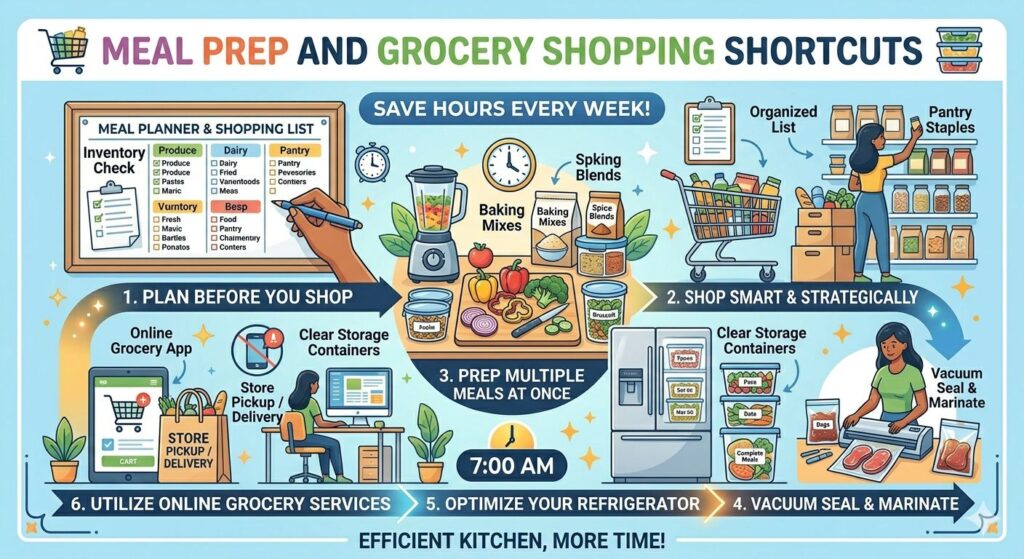
Plan Meals for the Week, Not the Day
A 20-minute Sunday planning session prevents daily indecision and last-minute takeout runs.
Cook Once, Eat Twice
Doubling a recipe and freezing half means future-you gets a ready meal without extra cooking time.
Keep a Running Grocery List
A shared list on the fridge or a phone app means no more retracing steps through the store for forgotten items.
Pre-Chop on Prep Day
Washing and chopping vegetables once for the week turns weeknight cooking into assembly rather than full preparation.
Communication Habits That Save Time
Miscommunication is one of the most expensive time wasters because it often requires redoing work.
Be Specific in Requests
A clear message with exact details (“Can you send the Q3 report by 3 PM Friday?”) avoids back-and-forth clarifying questions that can stretch over hours or days.
Set Response Expectations
Letting colleagues or family know when you check messages (for example, twice a day) reduces the pressure to respond instantly and protects focus time.
Use Voice Notes or Quick Calls for Complex Topics
Some conversations take five typed messages and ten minutes, or one 90-second call. Choosing the faster medium for complex topics avoids drawn-out text threads.
Decluttering Tricks That Pay Off Daily
A cluttered space creates a constant low-level time tax through searching, re-organizing, and visual distraction.
The One-In, One-Out Rule
For every new item brought in, one old item leaves. This keeps clutter from slowly creeping back after a big clean-out.
Digital Decluttering
Unsubscribing from unused emails, deleting unused apps, and organizing files into clear folders saves time every time a device is used, not just during the cleanup itself.
A Weekly 15-Minute Reset
A short, scheduled tidy-up session prevents small messes from snowballing into weekend-long cleaning marathons.
Delegation and Automation: The Most Underused Time Saver
Many people try to save time exclusively through personal efficiency and skip the most powerful lever: not doing the task at all.
Delegate at Home
Age-appropriate chores for kids, shared responsibilities with a partner, or hiring occasional help for deep cleaning frees up hours that no amount of personal optimization can recover.
Delegate at Work
Tasks that don’t require a specific skill set, or that someone else could do faster, are strong candidates for delegation. Holding onto every task personally is often slower for the team as a whole.
Automate the Repetitive
Recurring bills, regular orders, and routine reports are ideal candidates for automation. If a task repeats with little variation, it’s usually worth the setup time to automate it once.
Mindset Shifts That Make Every Tip Stick
Tips alone rarely create lasting change. A few mindset shifts make the difference between trying something once and it becoming a habit.
Progress over perfection. A slightly imperfect system used consistently saves more time than a perfect system abandoned after three days.
Protect time like money. Treating an hour of free time with the same respect as a budget line item makes it easier to say no to time-wasting requests.
Review and adjust. A five-minute weekly check-in on what worked and what didn’t keeps the system evolving instead of going stale.
Key Takeaways
- Most wasted time comes from small daily leaks, not big one-time events.
- Preparing the night before and using a launch pad can save over two hours a week on mornings alone.
- Time blocking, batching, and protected deep work blocks dramatically improve work output.
- Clean-as-you-go and the one-touch rule prevent small home tasks from piling up.
- The right apps and automations remove tasks from the list instead of just speeding them up.
- Meal planning and pre-chopping food cuts daily decision fatigue around dinner.
- Clear, specific communication avoids time-costly back-and-forth.
- Delegation is one of the most underused time-saving tips available to most people.
Frequently Asked Questions
Start with night-before prep, a single launch pad for essentials, and a weekly meal plan. These three require little effort to set up and produce noticeable results within a week.
Time blocking, batching similar tasks, and protecting a daily deep work block reduce wasted time from switching contexts, which often matters more than raw working speed.
A centralized calendar and task app tends to deliver the biggest impact, since it prevents missed deadlines and double bookings that cost hours to fix later.
Most people who plan meals weekly report saving three to five hours per week between reduced grocery trips, less daily decision-making, and fewer last-minute takeout orders.
The core principles stay the same, but delegation matters even more. Age-appropriate chores, shared routines, and batch-cooking tend to have an outsized impact for busy households.
Set a 10-minute timer before starting a task that feels overwhelming. Most tasks take far less time than anticipated once started.
Turning off non-essential notifications and setting specific check-in times rather than reacting to every alert removes one of the biggest daily time leaks.
If a tool reliably saves more time than its cost in money or setup, it’s worth it. Free calendar and reminder apps cover most needs before any paid tool becomes necessary.
Most habits become automatic within three to six weeks of consistent use, though simple ones like a launch pad or night-before prep often feel natural within days.