
Let’s take a typical case: a 4-year-old business has now managed to carve out a significant slice of the market, and with orders flowing in, the management is looking to relocate the company. It might be the offices and a factory/warehouse that needs to be relocated, and this would be a specialist job for a commercial removalist.
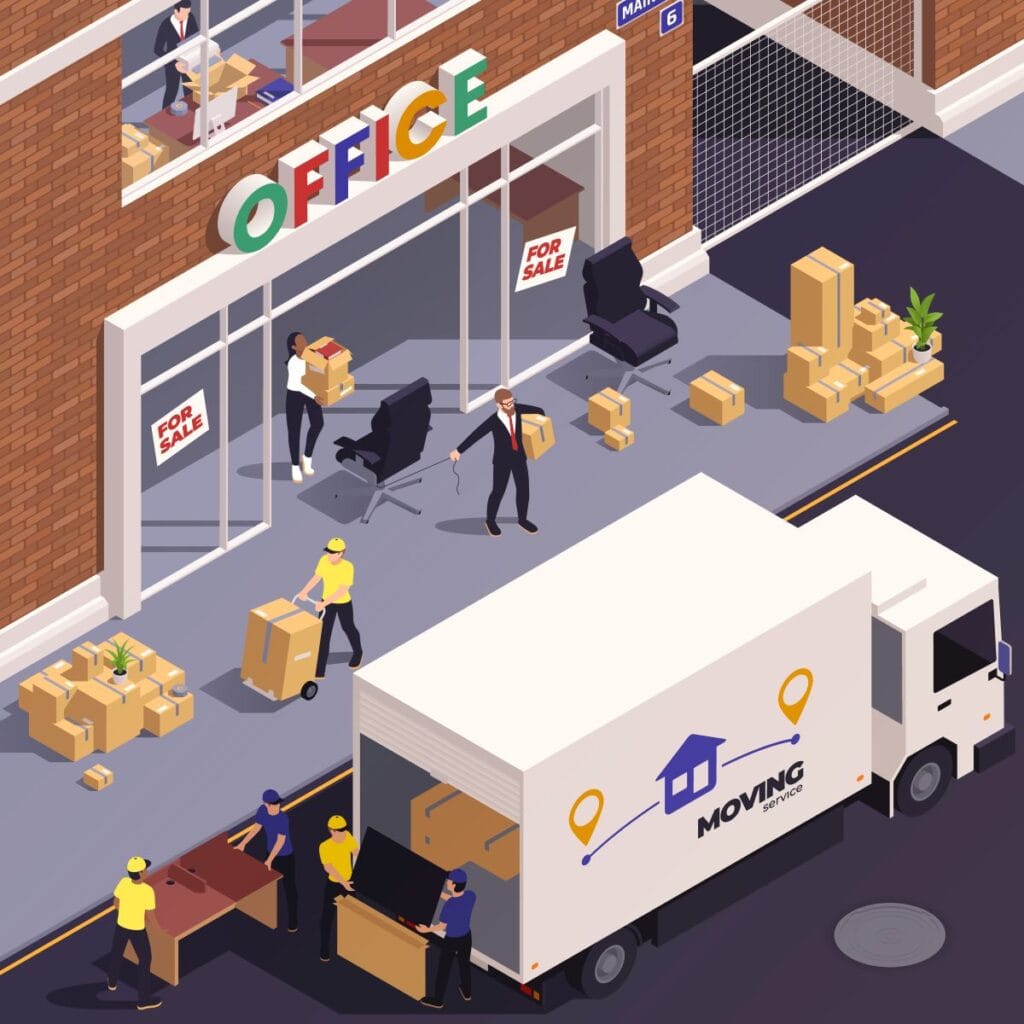
Here are some important aspects of such a project to take into account.
- Create an inventory – This is one of the first things to do; you need a list of every item that will be included in the relocation, plus another list of things that are to be auctioned or recycled. When moving offices, we want the organisation to continue to operate, so care must be taken, making sure all business data is safely on the cloud while the office computers are relocated. You could assign a couple of employees the task of listing all inventory, which they should be able to do in a few days.
- Budget – Relocating a business is never going to be a cheap operation, and you need to be sure that you have the costs covered. Hiring a commercial removalist will be the major expense, although there will be other costs, such as cleaning, asset removal and recycling materials that are not included in the move. Click here for tips on managing cash flow.
- Preparing the new facility – This might take a week; everything must be ready for the arrival of furniture, equipment and other assets; power must be connected, water turned on, and the Internet connectivity must be ready to go. You ideally need a team to spend a few days at the new HQ, ticking tasks off their lists, which would ensure that business operations are impacted in a minimal way.
- Setting up the new cloud network – As soon as your workstations are set up and your Internet router is connected, you want to be able to access your cloud; send in a team from a managed IT services company, and they will prepare the new offices for a secure cloud connection. If you run a LAN, this needs to be configured ahead of time, while all cabling needs to be in place.
- Think of the future – Relocating a business is a major operation and one to be avoided if possible; when you do have to find larger premises, make sure the new venue is large enough to accommodate more expansion. Leasing more land than you need is a wise move; simply annex a part of it in a few years, and you can expand the operation without having to move.
- Local government compliance – Everything must comply with state government guidelines; permits need to be applied for, and you need a commercial lawyer to go through any lease to ensure your business operations are not restricted in any way. Fire escapes and extinguishers must be in place and be prepared for inspections before permits are released.
- Scrap & recycling – Regardless of what type of business you run, relocating involves a certain amount of scrap and recycling. Prepare lists and arrange for 3rd party operators to access the equipment/material that is to be removed. If old equipment is to be auctioned off, do this before you start gathering assets to relocate.
- Choosing a commercial removalist – Of course, you want to engage the services of an outfit that has hands-on experience in relocating businesses, and they can be found with a Google search. Your choice of removalist should have the resources and the know-how to relocate your operation smoothly and efficiently, causing the minimum of inconvenience to the day-to-day running of the organisation.
- Location – Exactly where you plan to base your organisation is a critical decision and one that needs careful consideration; you could assign a team ahead of time to carry out a study to determine the best area to base the business HQ. If you export or import, being close to the port would make sense; major roads should be accessible.
- Leasing commercial real estate – Most companies prefer to lease commercial land, as this requires minimal investment, yet in certain circumstances, purchasing could be a better option; it depends on the financial status of the business. Either way, ask a good commercial real estate lawyer to go over the contract before you make any commitment. There can be hidden restrictions that can seriously hamper your operation, so a legal expert should review the document.
Many businesses in Australia are scaling down, rather than up, and this also requires relocation to a smaller base. Whatever your commercial logistics needs, there are specialist companies that are ready to handle your move.