Options pricing can seem complicated at first, especially when the premium seems higher than expected. One important factor here is the time value.
In options trading, time value is the amount over and above intrinsic value that a buyer is willing to pay for an option because time remains to exercise the option.
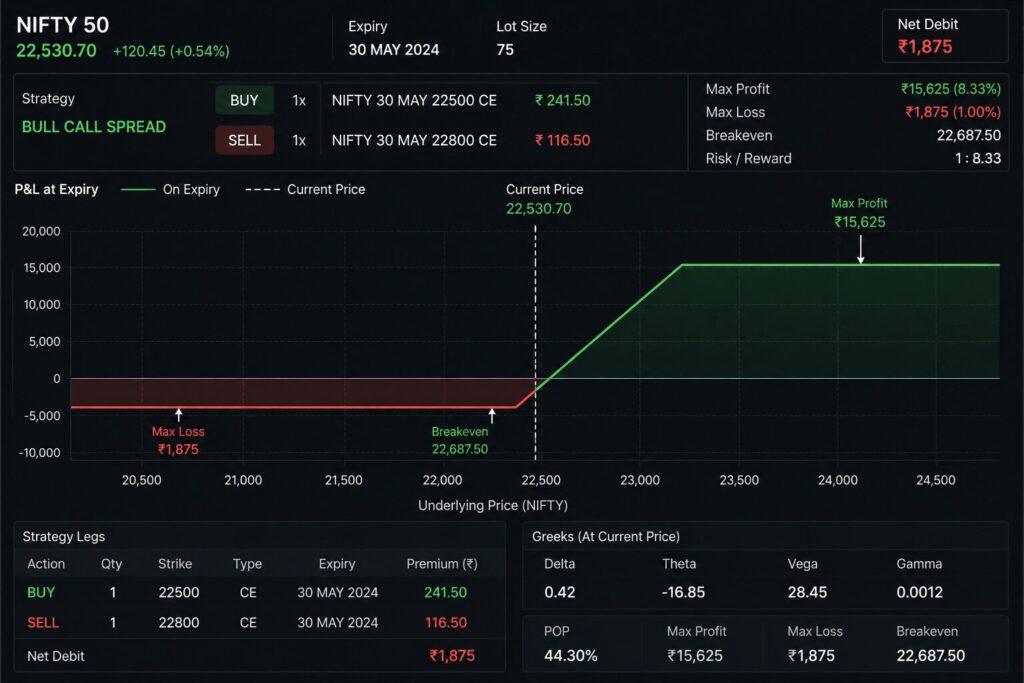
As the expiry approaches, the volatility of the markets increases. This is the reason time value is significant in option premiums and trade decision-making.
In this article, we will discuss the time value and its effect on option premiums.
What Is Time Value in Options?
The time value of options is an extra amount which you pay in an option premium apart from its intrinsic value. This indicates the potential for the option to increase in profitability before expiration.
In basic terms, a longer time until expiration means more opportunity for the market to move in your favour. The option is more valuable just in case. This is one of the first things people learn in option trading for beginners, as it explains why an option can be expensive despite having little or no intrinsic value.
Imagine that a call option is trading at ₹120, and its intrinsic value is ₹80.
So:
Time Value = ₹120 – ₹80 = ₹40
The time value here is ₹40. Traders are making this extra payment as they still have time for the stock price to move further and add value to their option before expiry.
Why Time Value Exists
The time value exists because an option still has the time to become more profitable before it expires.
The longer the time left, the greater the probability that the asset can move in the underlying direction.
The worth of that possibility is such that buyers are prepared to pay extra for it as a premium.
How Time Value Affects Option Premium
The premium of an option is directly affected by time value, because when a buyer purchases an option, they are paying for the option value now and also the potential value before expiry.
When an option has more time left until expiration, then the underlying asset has a greater chance of favourable movement. Because of that additional opportunity, the option typically has a larger premium. In essence, more time equals greater potential and more potential equals greater value.
This is why two options with the same strike price but different expiration dates will have different premiums. In most cases, the option with the longer expiration will cost more because it contains more time value.
At-the-money (ATM) options tend to have the highest time value because the underlying asset’s price is very close to the strike price. Even a small price movement can significantly impact the option’s value, making traders willing to pay a higher premium.
As time goes on, expiration approaches, and the time value disappears. If the underlying asset does not move enough, the premium will decline because the probability of future profit becomes smaller. teach you the most important concepts a beginner should know – which is why options can lose value even though the market is quiet.
Conclusion
The time value is the extra portion of the option’s premium that comes from the time remaining until expiration. The longer the time that an option has, the greater the chance that it gains value and thereby increases the premium. As expiration nears, this time value shrinks, which directly lowers the option’s price.
To learn more, enrol in Upsurge.club’s online option trading courses.