You’ve probably seen those perfectly styled interior shots, the ones where the wallpaper flows right up to the ceiling in a flawless, razor-straight line, patterns connect as if they were drawn by hand, and not a single seam is visible. It’s dreamy. But that’s the picture-perfect version. Once you’re standing in the actual room, it’s a different story. Ceilings slope, corners bow, and walls aren’t nearly as cooperative as the renderings made them seem.
This is where the quiet friction between design and installation starts to show. One side sees the space as a blank canvas for creativity; the other sees the quirks and flaws they’ll have to work around. The big question becomes: who decides where the wallpaper stops, and how perfect the alignment really needs to be? If you’re working with a wallpaper installer in Austin, knowing how these disagreements happen can help you avoid both headaches and wasted budget.
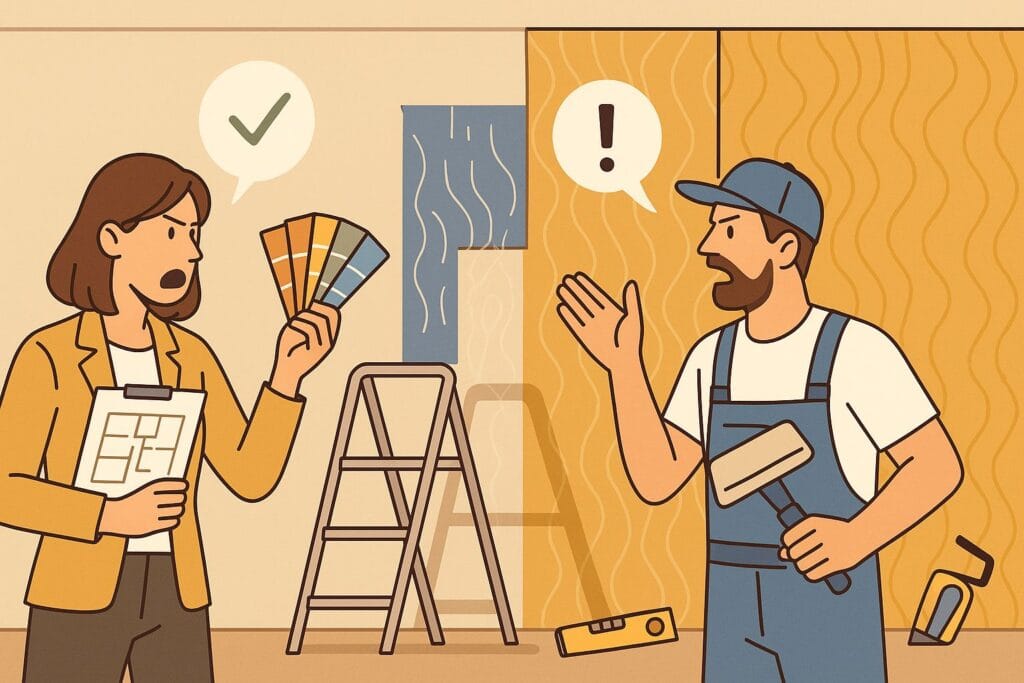
Designers picture walls as the visual foundation of the room, either a subtle backdrop or a bold feature. Installers, however, focus on making that vision stick (literally) to surfaces that might be uneven, wavy, or far from perfectly square. Designers want flawless; installers want flawless and functional. And those two goals don’t always fit neatly together.
When communication slips, the client ends up stuck in the middle, wondering why their wall doesn’t match the dreamy concept image they were promised. Most of the time, the points of tension fall into three repeat offenders: ceiling alignment, pattern matching, and edge finishing.
The Hidden Tension Behind Beautiful Walls
At the heart of these disagreements are different priorities. Designers lean toward what looks stunning in photos or walkthroughs; installers are thinking about how that same wall will look after two years of Texas humidity or with kids running around. Without a clear plan from the start, both end up making calls at the moment, sometimes in ways that the other side wouldn’t have chosen.
Designers Say “Seamless Look”, Installers Say “Technical Limits”
Common Point of Conflict #1: Ceiling Alignment
From a designer’s perspective, bringing the wallpaper right up to the ceiling creates a clean, unbroken look. The top line feels sharp, almost invisible, and it frames the wall beautifully. But in reality, few ceilings are perfectly level. Even a slight slope can make that supposedly straight edge look crooked to the eye.
Installers know this, which is why they may suggest leaving a tiny gap or trimming the paper just shy of the ceiling line. It’s not about laziness, it’s about preventing uneven edges, wasted material, and potential lifting where the wallpaper can’t adhere properly. While this adjustment might break the “perfect” line in theory, it often results in a wall that looks straighter overall.
Common Point of Conflict #2: Pattern Matching
A designer’s dream: the pattern flows continuously from one wall to the next, no breaks, no mismatched repeats. The reality: matching patterns exactly can eat up far more wallpaper than expected. In rooms with odd angles or walls that aren’t truly parallel, you might lose a lot of usable material just to maintain that perfect flow.
From the installer’s side, this isn’t just about the extra work. It’s also about budget and efficiency. Lining up complex patterns in a tricky room can double the time on site and push the cost much higher. Sometimes a small visual compromise — one that most people wouldn’t notice is the practical choice.
Common Point of Conflict #3: Sharp Edges or Overlapping Finish
Designers often push for a crisp edge at the end of the wallpaper, whether it’s meeting another wall, a doorway, or a corner. Installers, however, may prefer to wrap the paper slightly around the corner or overlap edges by a fraction. The reason? Sharp cuts at corners are vulnerable, they can peel, tear, or lift over time.
To the trained eye, the installer’s approach adds durability without noticeably changing the look. But in a side-by-side comparison, the difference can be enough for a designer to push back. Again, it’s the tension between the ideal visual and the practical lifespan of the work.
What Causes the Miscommunication?
It usually boils down to three things:
- Different priorities, beauty versus practicality.
- A lack of technical notes in the design plans, installers are left to guess what’s acceptable.
- Clients being left out of the technical conversations, meaning they don’t understand the trade-offs until it’s too late.
Without everyone at the table early on, small differences in approach can snowball into frustration.
How to Bridge the Gap Tips for Smooth Collaboration
Early On-Site Meetings
Before a single roll of wallpaper is cut, get the designer and the wallpaper installer together in the actual space. This allows the installer to point out ceiling dips, uneven walls, and other quirks that could affect the installation. Designers can then tweak the plan adjusting expectations before the work starts, not after.
Clarify Expectations in the Drawings
Renderings and mock-ups should be more than just pretty pictures. They need notes about where patterns start and end, how much misalignment is acceptable, and any known irregularities. These details give installers a clear roadmap and reduce on-the-spot guesswork.
Let the Installer Speak Up
Designers who treat installers as partners, not just workers, tend to get better results. Installers bring years of hands-on problem-solving to the table, insights that can save money and prevent headaches. Encouraging them to voice concerns early can lead to creative solutions that still respect the design intent.
Final Thoughts It’s a Shared Canvas
A wall isn’t just a surface; it’s the meeting point between creative vision and skilled craftsmanship. When designers and installers respect each other’s expertise, the end result is something that looks great and stands the test of time.
The polished walls you see in a finished home aren’t the work of one person alone. They’re the product of back-and-forth conversations, small compromises, and careful planning. If you want a room that looks as good in reality as it does in the design phase, choose a wallpaper installer who understands both the art and the science of their craft. That way, you get beauty and longevity in one package, and a wall that makes you smile every time you walk past it.