
When it comes to landscaping a sloped backyard, many homeowners feel overwhelmed by the perceived complexity and expense. However, with a bit of creativity and some resourceful planning, it’s entirely possible to transform a sloping backyard into a beautiful and functional space. Here are five budget-friendly ideas to get you started.
1. Terrace the slope with reclaimed materials.
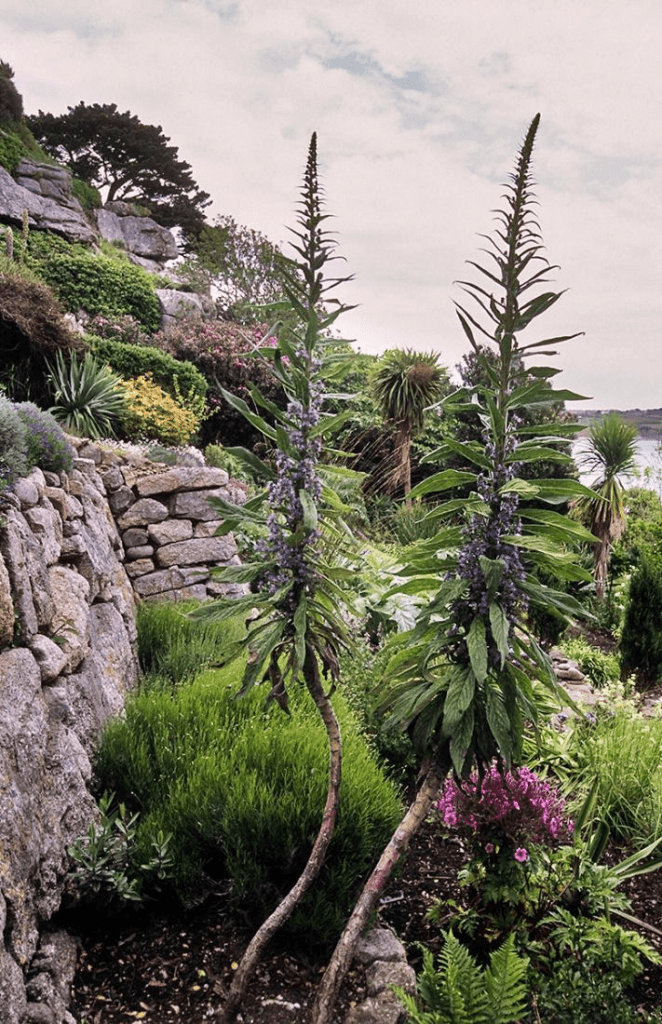
Terracing is still the single best fix for a sloped backyard, and it’s not close. You’re cutting the hill into a series of flat “steps,” which instantly gives you usable ground for planting, seating, or even a small fire pit built along one of the levels.
The trick to keeping costs down is sourcing materials instead of buying new. Salvaged pallets, reclaimed 2x lumber, and broken concrete pavers (sometimes called “urbanite”) show up free or nearly free on local marketplace listings and at construction sites that are happy to have someone haul debris away. Natural fieldstone works too, and a lot of quarries will sell “seconds” stone with minor chips or odd shapes at a steep discount because it’s not sellable as premium stock. https://architectureadrenaline.com/how-to-build-a-fire-pit-on-a-sloped-yard/
Budget-friendly sloped backyard ideas built around terracing usually run $200 to $800 per level when you’re sourcing your own materials and doing the labor yourself, versus several thousand for a professionally built retaining wall system. That said, don’t skip drainage. A terrace without a gravel backfill channel behind it will hold water, and a waterlogged slope is exactly the erosion problem you’re trying to solve in the first place.
2. Add Timber or Stone Steps for Safe Access
Once you’ve got levels, you need a way to move between them without sliding down on wet grass — ask me how I know. Rustic steps built from pressure-treated landscape timbers are one of the cheapest ways to solve this. An 8-foot 6×6 timber typically runs $15 to $25, and a full flight of steps for a residential slope usually lands under $300 in materials, which is a fraction of what poured concrete steps would cost.
Secure each timber with rebar stakes driven through pre-drilled holes, then backfill behind it with compacted gravel for drainage. Space the steps to match a natural stride — roughly 24 inches center to center — so the path doesn’t feel awkward for kids or older family members using it.
3. Plant a Wildflower Meadow on the Open Slope
If part of your slope isn’t going to be walked on much, stop fighting it and let it go wild. A wildflower meadow solves two problems at once: it’s genuinely low-maintenance, and the root systems of most native wildflowers do far more to hold soil in place than a mowed lawn ever will. Turf grass roots are shallow; a lot of native wildflowers send roots down several feet, which matters a great deal on a grade.
Seed mixes for a 1,000-square-foot area typically cost $50 to $150, and a decent regional mix will stagger bloom times so you get color from spring through fall rather than one big flush. Skip fertilizer here; wildflowers actually do better in leaner soil, and feeding them tends to favor weeds over blooms.
4. Install a Rain Garden Where Water Collects
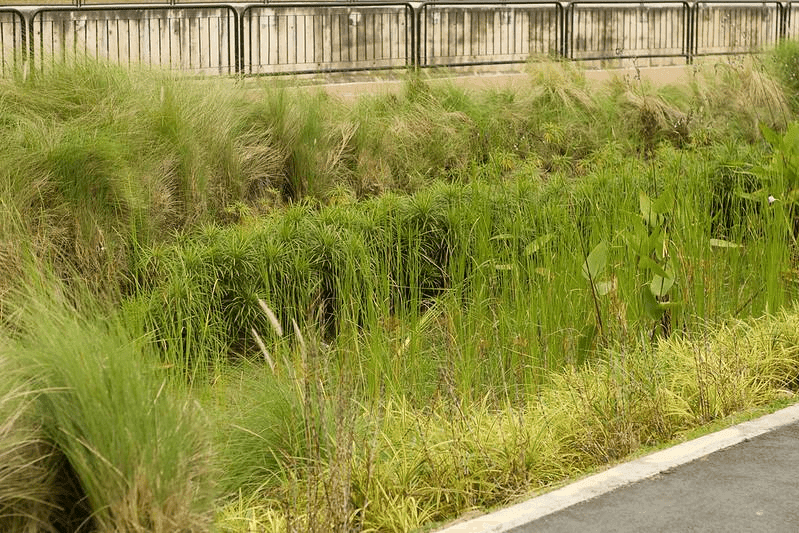
Every sloped yard has a spot where water naturally wants to go — usually the low corner where your downspout empties or where you notice puddling after a storm. That’s your rain garden site. A rain garden is a shallow, planted depression that catches runoff and lets it soak into the ground instead of racing downhill and taking topsoil with it.
This matters more than most homeowners realize. According to the EPA, a huge share of water pollution in the U.S. comes from stormwater runoff carrying fertilizer, oil, and sediment straight into local waterways, untreated. A rain garden intercepts a good chunk of that before it ever leaves your property.
DIY rain gardens generally cost $3 to $5 per square foot when you’re using native plants and skip the professional design fee. Stick to deep-rooted native grasses and perennials, since they handle both the occasional flooding and the dry spells between storms better than ornamental varieties. Expect infiltration after a heavy rain to take up to 48 hours — that’s normal, not a design flaw.
5. Build a Pathway That Actually Gets Used
A slope without a path just doesn’t get walked. People will avoid the far end of the yard rather than pick their way down bare dirt, which means that part of your property basically stops existing for day-to-day use. A pathway fixes that immediately, and it’s one of the more forgiving, budget-friendly, sloped backyard ideas to execute yourself.
Gravel is the cheapest option by a wide margin, running roughly $1 to $4 per square foot installed, compared to $16 to $30 per square foot for a formal paver walkway. Stepping stones split the difference — source them secondhand from demolition sites or salvage yards, and you can build a charming, functional path for well under $200. Whatever material you choose, slope the path slightly (about a quarter inch per foot) so water sheds off it instead of pooling, and keep it at least 36 inches wide if more than one person will use it at a time.
6. Cover Bare Soil with Erosion-Fighting Ground Cover
Bare soil on a slope is basically an invitation for erosion, especially in that awkward window after you’ve cleared old growth but before anything new has filled in. Ground cover closes that gap fast and cheap. According to University of Missouri Extension, erosion is a particular problem on steep terrain, and dense ground cover is one of the most effective tools for minimizing it more so than lawn grass in shady or difficult-to-mow spots.
Creeping thyme, sedum, and low-growing junipers are solid picks depending on your sun exposure, and most nurseries sell them as inexpensive plugs rather than full-grown plants, which cuts your cost dramatically. Figure $0.50 to $2 per square foot if you’re buying plugs and letting them spread naturally over a season or two. One thing worth knowing: NC State Extension specifically warns against fast-spreading vining ground covers like English ivy and vinca they’re invasive in a lot of regions and can actually smother the native plants doing the real erosion-control work. Stick with native or well-behaved species instead.
For more layout inspiration once your slope is stabilized, our guide on budget backyard landscaping projects walks through how to zone the flat sections you’ve created.
Retaining Wall Alternatives: When You Need More Structure
Sometimes a slope is steep enough that terracing with reclaimed materials isn’t quite enough, and you’re looking at an actual retaining wall. Professional retaining walls average $20 to $60 per square foot of wall face depending on material, according to Angi — and that adds up fast on anything more than a small section.
If you’re on a tight budget, pressure-treated timber is the most affordable structural material, starting around $15 per square foot, and it’s realistically DIY-able for walls under three feet. Anything taller, or any wall holding back a significant slope near your foundation, is worth having an engineer or contractor look at before you dig the cost of a permit and consultation is small compared to the cost of a wall failure. We cover the DIY-versus-professional decision in more detail in our retaining wall ideas for sloped yards guide.
Frequently Asked Questions
What is the cheapest way to landscape a sloped backyard?
Terracing with reclaimed materials—pallets, salvaged wood, or free stone from a construction site—is generally the least expensive structural fix, often running $200 to $800 per level for a DIY build.
How do I stop erosion on a sloped backyard without spending much?
Ground cover plants and native wildflower seed mixes are the most affordable erosion-control options, typically costing well under $200 for a modest slope, and they need little upkeep once established.
Do I need a permit to build a retaining wall on a sloped backyard?
In most areas, yes, once a wall exceeds 3 to 4 feet in height. Shorter walls are usually fine as a DIY project, but always check with your local building department before you dig.
Can I landscape a steep slope myself, or do I need a professional?
Smaller slopes and walls under three feet are usually manageable as DIY projects. Steeper grades, walls near a foundation, or anything involving structural engineering is worth hiring out—the risk of a wall failure isn’t worth the savings.
How much does a rain garden cost compared to a French drain?
A DIY rain garden generally runs $3 to $5 per square foot, which is often cheaper than a professionally installed French drain system, and it adds planting and habitat value that a buried pipe simply can’t.